Category Archives: Uncategorized

Freelance journalism vs freelance copywriting: which is best? (The case for journalism.)

Back when I was 12 or 13 I decided to become a journalist. That was the life for me, I thought. Travel. Glamour. Smoking at my desk. Smoking in my car. Smoking in someone else’s car. Smoking on the phone. Smoking on someone else’s phone. Deadlines.

See, I loved Fletch. And I quite liked putting words together, telling funny stories. And I didn’t know what else to do.

So that was that. I was, I announced to the world, to become a journalist.

Then I did nothing about it for the next twenty years. Then I became a freelance journalist for a bit. Then I stopped. What a ride. What thrills. What storytelling abilities I still have. Go me.

Lately I’ve been thinking about going back into journalism. I’ve been just, you know, taking a look at the landscape. Giving it a poke and seeing if it moves.

See, I mostly do copywriting now. And I mostly like doing copywriting now. But there’s something about journalism that keeps drawing my attention. I can’t help myself. I keep giving it looks. Sexy looks using my eyes. Come hither looks. Looks you wouldn’t want to see. Why wouldn’t you want to see them? Oh, I don’t know, probably because they would stir the hell out of you. They certainly stir the hell out of me. I should know, I’ve been practicing them in the mirror.

In fact, I’m off to practice some of those looks in the mirror now.

Right, okay. Done. Anyway, there’s a lot about it I miss. Journalism, I mean – not the mirror. In fact, I DO MISS THE MIRROR, I’m going to go back there in a second. In the meantime, here are a few reasons why I think freelance journalism knocks freelance copywriting into a cocked hat.

1. You get bylines.

Who doesn’t love a byline? Nobody, that’s who. Quite illustrious, isn’t it, having your name and your photo in a paper like … The Guardian. Or The Independent. Or having a zinger-filled bio in the Contributors section of a travel magazine that reads like you dusted it off in five minutes over lunch but actually took hours. I don’t know. I just used to get a kick out of seeing my work in newspapers and magazines in newsagents. Once I was on the 73 bus and someone was reading a piece in a paper about how I nearly died of anaphylactic shock and I wanted to gently slide into the seat next to them and whisper, “I wrote this. Would you like me to read it to you? Ooh, look at this bit where my tongue swelled up so much that I could hardly talk.”

And copywriting? Not so much. It’s slim pickings, byline-wise. I write corporate scripts that get popped into other people’s mouths. I write blogs and newsletters and case studies and social posts and training modules and all kinds of other things that might have traces of me – or might have a lot of my personality pumped into them, poor things – but they aren’t really me as there’s not a photo and my name and a hilarious-yet-time-consuming bio.

Incidentally, the last thing that I wrote that could, at a stretch, be considered journalism, was actually anonymous. Far out, right? It was about playing poker for a living. One of the top rated comments on the piece (out of 240 or so) was:

“There’s so much going on here that’s psychologically bad, it’s hard to know where to start.”

Right then. Onwards.

Psychological badness, earlier.

2. You get to write as yourself.

Look, this isn’t the same as what I was saying above. What I’m saying here is this: as a journalist I wrote, wherever possible, about me. Writing about me was easy. Other people couldn’t do it, not really. And it meant I could get into all kinds of capers. Trying to sell my organs. Playing cards for 30 hours straight. Going for a football trial with Colchester United. Other things.

The good thing about writing about yourself, and about things that have happened to you, in your own voice, is that your work sails through the editing process.

“Well … okay,” harrumph the sub editors. “We suppose that’ll do.” And off it goes, to publishing heaven.

The editing or amends process in copywriting works a bit differently. What happens is that sometimes your work does just sail through. Actually, mostly. Maybe you have to change a word. Maybe you have to clarify something, or approve a change that someone has made but it’s, you know, more or less there and more or less painless.

But that doesn’t always happen.

Other times what happens is that you get five or six people in a document all taking potshots at your finely polished and laboured-over work and so, by extension, you feel like they’re taking potshots at your finely polished and laboured-over self. Which is quite something. Honestly, there have been times where I’ve gone into a document, seen the comments, glanced at the suggested edits, and felt my stress levels rise to that of a Yorkshire detective hunting a serial killer. Sweaty palms. Racing heart. Non-sexy eyes. All over a few comments. Ridiculous.

Anyway, we’re almost there now. Just one more reason to go.

Revising and Editing | Collins Education Associates

Editing, earlier.

3. You get to join a union.

I love unions. I loved being in the union when I was a postal worker. Out of the other hundred or so jobs I’ve had, I’ve never been in a union. But I love them. And as a journalist you can join the NUJ, the National Union of Journalists. I never did that, by the way, but if I go back to freelancing a bit, and I qualify, then I’m going to totally join the NUJ. Because I love unions.

…………………………………….

And that’s that. We’re done. Look, I’ll be honest: this didn’t turn out how I wanted it to. It probably didn’t turn out how you wanted it to either. Let’s call it a draw.

If I’m being entirely transparent, I lost heart a bit towards the end. I genuinely do want to write for magazines again at some point. And I also want to wrestle with a few hefty features for the FT Weekend, one of my favourite things to buy and read on the planet. But I also glimpsed at the rates freelance journalists are getting and the stories coming out of freelance journalist’s mouths and it made me shriek. Shriek, then scarper back to the sanctuary of freelance copywriting.

Which is up next time. There, we’ll take a closer look at the case for copywriting and I’ll do my best not to waffle on about being all sexy-eyed and that.

Until then.

Pitching The Guardian

Turns out I’m a big, fat liar.

Last time out, when I was writing about pitching The Drum, I said something like, “This is the first pitch I’ve sent in years.”

But then I remembered it wasn’t. See, a biggish thing happened to me last year. And I wanted to write about that biggish thing on here.

Thing is, when you’re writing about biggish things it’s easy to become foggy and mawkish. Plus: it’s still a bit raw.

A pitch on the other hand … I have no problem with posting a pitch about biggish things that have happened to me.

So here you go.

…………………

To: Andrew Gregory @TheGuardian; Barbara Speed @The Guardian

From: Pitching the World

Date: Apr 29, 2024

Subject: Post mini-stroke support is lacking – and alarming

Hi Barbara and Andrew,

First, huge apologies for the double-pitch. I didn’t know where this might be best suited – Opinion or Health. (It’s no excuse, really, but I’ve been out of the freelance journalism game for a while.)

Second, I feel like I have a decent feature brewing. 

Rageh Omaar had a suspected (by some) mini-stroke at the end of last week while hosting News at Ten and carried on. The week before that, I had a mini-stroke while playing tennis and also carried on. For about five games. Then I had to stop and go to the hospital in an ambulance with blue, flashing lights.

The incident was scary. I couldn’t speak properly. Plus: numb tongue, numb right side of my face, a numb right arm and numb right leg that wouldn’t really function. In hospital they tell you that you’ve had a mini-stroke – that bit is scary, too – and put you through all sorts of machines and do all manner of tests before popping you on statins, BP-lowering medication and anti-platelet medication before sending you home. 

But if the mini-stroke is scary, the landscape you face when you come out is scarier. I’m a reasonably fit, reasonably active, reasonably happy and reasonably middle-aged (48) writer. Yet I came out of the hospital worried. Worried that pushing too hard at work caused the stroke and that I might need to work at half the pace or – worse – give up work altogether. Worried that I’d have to move out of my flat. Worried that my life would unravel (again). 

Most of all, I was (and am) worried that I might have another stroke. I’ve seen some stats suggesting that almost one in three TIA survivors will go on to have a major stroke within a year. Some studies say that 11% of those who experience a TIA will have a bigger stroke within a week

The figures are hazy – and change from paper to paper and study to study. Yet the underlying reality is that TIAs are a warning and often signal a bigger stroke is on the way. So why is the after care so poor? Why are you sent from hospital with a follow-up appointment in six weeks’, a bag of drugs, and not much else? Why, with stroke being such a major cause of death and disability in the UK, are we not doing more to support those who have experienced a TIA – particularly in the first week or two?

And it doesn’t have to be massive help. Maybe some information on getting back to work, what you should and shouldn’t be eating, how often to exercise, how to deal with these blobs of depression and suicidal ideation. A number to call. A GP to chat with. That kind of thing. 

I’m really blathering, aren’t I? Sorry about that – it’s been a tricky couple of weeks. Anyway, anything in this, do you think?

Thanks for reading, cheerio for now,

Pitching the World

…………………

Updates on what happened with that pitch – and what happened to me after April – when I have the stomach for it.

April, earlier

What’s this? An actual pitch? To the actual Drum?

Turns out that being a best-selling author isn’t all it’s cracked up to be. After becoming a best-selling author, things went a bit wrong. Well, actually, things went a lot wrong. Life, eh? Look at it: going a lot wrong and that.

Anyway, that’s perhaps for another time. (You know, what’s been going on for the last seven years and how things went a bit – A LOT – wrong.) 

In the meantime, I actually wrote an actual pitch. My first one in years.

………………………………………………………………………………………………………….

To: Gordon Young @ The Drum

From: Pitching the World

Subject: I’m elevating this robust pitch, Gordon, with impactful writing solutions

Hi Gordon,

Sorry to email you out of the blue like this but I think I have something that might fit for The Drum. 

What if marketing-speak isn’t as bad as we think it all is?

So, in the advertising and marketing world we all can’t bear marketing speak, right? We’re sick of it. I know, as a jobbing copywriter, that I am. But as one of only a handful of copywriters in the UK who run their own experiments into the effectiveness of language* I didn’t want to just say it. I wanted to prove it. 

The idea? Take two pieces of text, both saying the same thing, but have one crammed with marketing-speak (‘unleash’, ‘innovative solutions’, ‘robust’ … you get the picture, I’m sure) and the other in well written plain-speak. My hypotheses? Plain-speak would trounce the marketing-speak. I ran them both through readability calculators and tested them out on an LLM (‘Is this writing clear?’ ‘Is this writing memorable?’ ‘Is this writing likely to be acted upon?’) and the plain-speak version shone brightly. Readability calculators loved it. LLMs loved it. And both hated the marketing-speak version. So far, so predictable.

Next, I tested out on the public – specifically through Prolific. I thought I’d have my suspicions confirmed – that there would be howls of protest, that participants in the study would loathe the marketing-speak version, that the overexposure and overuse of these words would have caused some sort of semantic bleaching and readers would find marketing-speak lazy, cliched, tired, foggily obscuring the message and a whole heap of other bad things.

But that didn’t happen. In fact, people preferred marketing-speak over plain-speak. So I ran my smallish pilot again. Same results. I cartoonified the language further, stretching it to ridiculous proportions – “Unleash more sales solutions” – and still the same thing. Overwhelmingly there was a feeling that marketing-speak sounded more ‘dynamic’ and ‘smarter’ and ‘more sophisticated and professional.’ 

Anything in this, Gordon? As copywriters, marketers and ad people we assume that the public are as tired as we are of the seemingly trite sentiments of marketing speak. But what if the truth is different from that? What if we – collectively – have to get out of our bubbles a bit more? (I’m saying this as someone who loves Japanese selvedge denim and Picasso t-shirts as much as the next person.) To actually, you know, go out and test out some of this stuff rather than making assumptions. There’s maybe even room to explore if a conversational tone of voice is all it’s cracked up to be. I’ve read studies and papers showing that, actually, there are some circumstances where a corporate TOV fits much better …

This is my first pitch in years. I know, I know: IT’S WAY TOO LONG. Sorry about that. If it’s not a good fit I have other places in mind but The Drum felt like a good home for it. I’ve got plenty of clipping from my time writing features for broadsheets and magazines and hundreds of columns and reviews if you’d like to see any published work. 

Many thanks indeed,

PTW

*You know what, I don’t know if this is true – but I do know that it feels true.

………………………………………………………………………………………………………….

A drum, earlier

Gordon, who’s the editor of The Drum, got back to me within an hour or two. “Wow,” he opened, “sounds sensational.” And went on to tell me that he passed my pitch on to John, The Drum’s Opinion editor. 

So, that’s a thing that happened. I sent a pitch and got a reply to a pitch. Who knows where that might go. 

And who knows where I might go. Nowhere, hopefully. I’ve missed this place like the dickens. But I also know that I have certain … proclivities. 

Thanks for reading.

I am an Amazon best-selling author


It’s true, I am.

Look:

Amazon.co.uk Best Sellers The most popular items in Card Games (2)

A best-selling author who clearly isn’t a best-selling screenshot capturer, earlier.

This best-selling author status comes with caveats – I’ve got caveats coming out of my ears. It couldn’t be any other way, though, not really, I couldn’t be a best-selling author without caveats coming out of my ears. Such caveats include, but are in no way limited to, the following:

  1. It’s tenuous and niche as hell. I am the best-selling author in a small ‘Card Games’ sub-section of Amazon and have only been there over the last day or two. If the handful of people who I’ve browbeaten into buying my book refuses to grow, my best-selling author status will evaporate by the end of the weekend.
  2. You don’t have to sell many copies to become a best-selling author in a niche sub-section. I couldn’t, for example, buy an island with my royalties. Nor could I buy a plane ticket to an island. I couldn’t even pay for a taxi to the airport. I could afford to buy some stamps and put them on postcards and send them from an island but that, seriously, is about it.
  3.  It’s not really a book. Perhaps this should have been at the top of these caveat-bullet-points. Notes from the Poker Trenches is a collection of poker columns from 2012/2013 that have been annotated. These annotations have allowed the 2018 me to emotionally and psychologically beat up the 2012/2013 me. This has been somewhat enjoyable; 2018 me has liked doing this.
  4. Seriously, it’s not really a book. It’s self-published and so I’m not sure it qualifies as a proper book.
  5. The cover is an homage to Dostoevsky’s Notes from the Underground. It’s not just chucked together because I (a) couldn’t afford a cover designer, (b) was incapable of designing a cover myself or (c) just had some vague feeling that “the words should speak for themselves”.

So, yes, caveats. Over the next week or so I will be detailing the process, from the seedling of an idea (in this instance, someone suggesting I collate a bunch of my old poker columns), through formatting (easy), cover design (even easier), publication (press a button that says ‘Publish’) and marketing (this post). Bet you can’t wait.

In the meantime, if anyone fancies maintaining my status as a best-selling author then please feel free to click on this highlighted bit here and part with £1.99. Seriously, it would make me happier than you could imagine.


The Secret

Regular readers will be well aware that this project (if you can call it that) has more or less been a psychological, emotional, financial and matrimonial (and pretty much any other al-suffix) bap-up since its inception in 2009. Plus: brackets. Way too many brackets.

But then this afternoon as I was idly dodging work and hiding from the scarier corners of my life (read: all of them), I realised that all along I had been doing the whole thing wrong.

By the whole thing, I mean pitching and writing articles. And by wrong, I mean wrong.

Let me explain.

This afternoon I watched the Cambridge Analytica press conference in its entirety. Cambridge Analytica, as many readers will know, are credited with some degree of orchestration in the Trump and Brexit campaigns and have been implicated in the illegal hoovering up of data from tens of  millions of Facebook users. And so today, in order to clear things up, Cambridge Analytica held a press conference conducted by Clarence Mitchell, a former “BBC journalist and PR specialist,” according to the Guardian, who gave a statement before brusquely fielding questions from various journalists.

So far, so normal. I don’t really understand the mechanics of such things, but if I were in Cambridge Analytica’s position that’s exactly what I would do: get a person in to be its spokesperson, preferably someone who doesn’t have any history with the company and who, at a press conference, can answer questions badly (or not at all) about what said company been up to.

One exchange in particular really struck me. It was as if, oh I don’t know, as if Clarence Mitchell held some sort of key to the secret of journalism (and the secret to life, perhaps) and here he was, in all his blunt glory, offering it to me.

Below is a brief transcript from this afternoon’s press conference:

Journalist: “If Cambridge Analytica’s position is that no work was carried out by Leave.EU, why did it invoice Leave.EU?”

Clarence Mitchell: “Because if you understand anything about business, you’ll understand the pitch process, i.e. a bid to get the contract, to get the work, involves a certain amount of time and effort and personnel…” 

And suddenly it all clicked. There was a me before this press conference and a me after. I realised that before I didn’t understand anything about business but that now, after hearing some words from my new guru Clarence Mitchell, I did. I’d been wasting my time. I didn’t need to write for these magazines, I just needed to pitch them. And the pitch didn’t even need to be any good, thank god, as long as it involved a certain amount of time and effort and personnel. After that I could invoice.

Irwin M Fletcher

A journalist post-invoicing, earlier. 

Frankly, I’m delighted with this new slant on getting paid for stuff, of doing business. But it’s not the only thing that I’ve learnt from – and subsequently been delighted by – Cambridge Analytica in the last couple of months. In February 2016 Cambridge Analytica CEO Alexander Nix wrote in Campaign Magazine that, “We have already helped supercharge Leave.EU’s social media campaign by ensuring the right messages are getting to the right voters online.”

Yet when questioned by a House of Commons select committee earlier this year about such a statement, Nix said, “Let me be absolutely crystal clear about this. We did not work for Leave.EU. We have not undertaken any paid or unpaid work for them, okay?” But the Campaign Magazine stuff? “Drafted by a slightly overzealous PR consultant.”

Mr Nix also went on to say that meeting and being in contact with various groups and companies could be classed as work. This, again, is gold for me. Over the years I have been in contact with tons of newspapers and magazines about writing for them and in most instances it’s all kind of petered out. Yet because of these new, Cambridge Analytica-shaped “rules” I can now class them among my employers.

That will have to do for now, I’m afraid. It’s late, and I have hundreds of invoices to send and a new CV to write.


Why I stopped working for Alexander Nix: Part Three

n.b. In a breathtakingly daring move, it appears that I’ve leapt straight from, ‘Why I stopped working for Alexander Nix: Part One,’ to, ‘Why I stopped working for Alexander Nix: Part Three.’ This is (somewhat) explained down there a bit. But even though we’re not at part two, we are at least somewhere. Usually on here when I write “Updates to follow,” or “Next time I am going to be writing about this, this and this,” the updates don’t follow and we never get to hear about the this-es. So this is something, at least. 

When the Cambridge Analytica/Alexander Nix scandal (properly) broke early last week and was the lead item on BBC News at Six, I was sitting in my Nan’s living room with my Nan and my Mum.

“LOOK, LOOK, LOOK” I said to them, drowning out the opening clangs of the BBC News, “THAT’S Alexander Nix. THAT’S who I used to WORK for.”

I’m not sure my Nan believed me. I’m not sure my Nan thinks I’ve worked for anyone.

Then, a few minutes later:

“…and we now go over to our North American technology reporter Dave Lee…””

“I KNOW HIM TOO – Dave Lee. He reads Pitching the World.”

My Nan reached for her phone book and started to turn to the page marked, “NUMBER FOR STEVE’S SECTIONING”

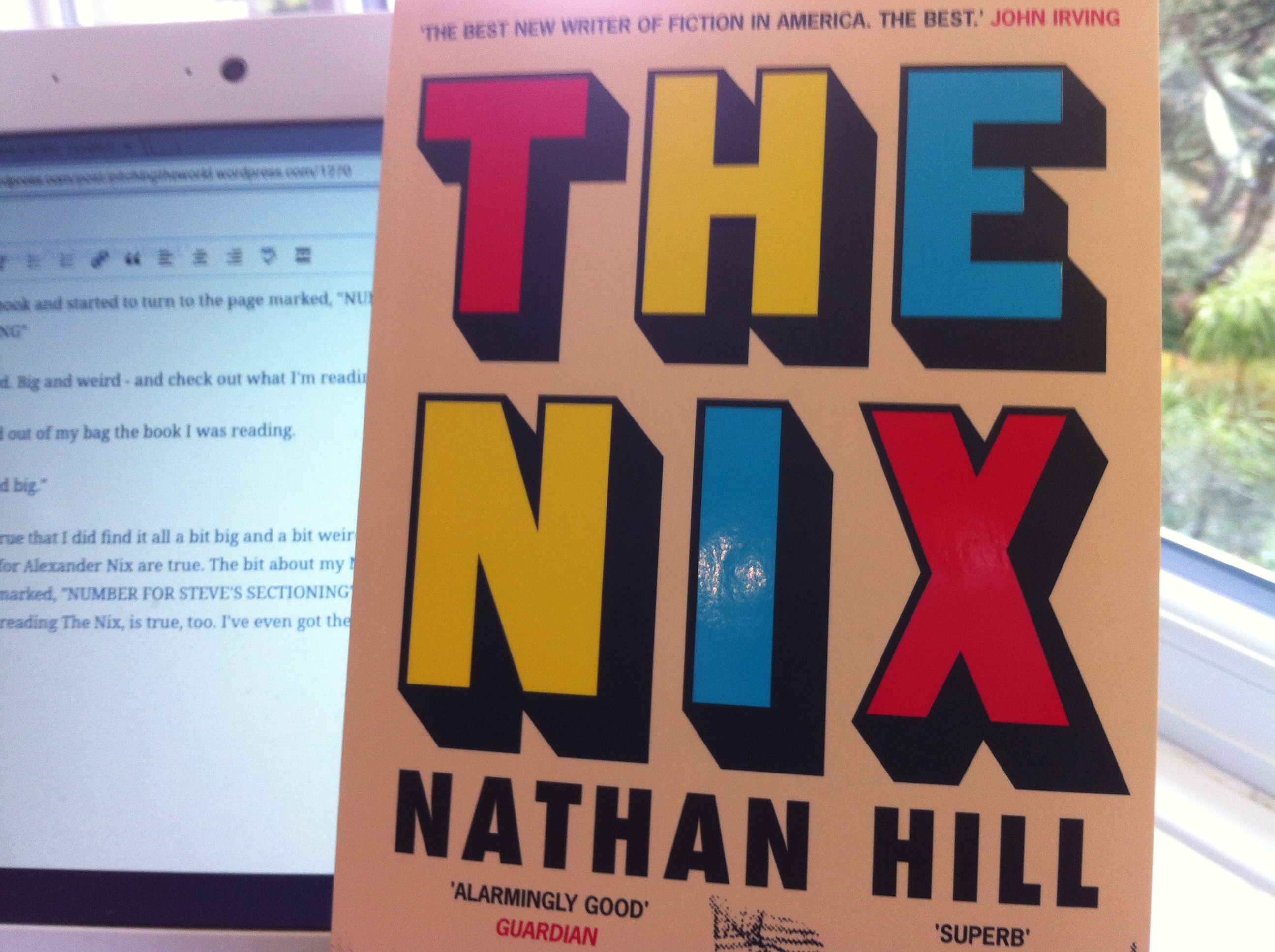
“Oh, this is big,” I said. “And weird. Big and weird – and check out what I’m reading.”

I went into the kitchen and fished out of my bag the book I wanted them to check out.

“Look – The Nix.  This is big and weird. Not the book, the news.”

Most of the above is true. It’s true that I did find it all a bit big and a bit weird. It’s true about Dave Lee and working for Alexander Nix, too. The bit about my Nan having a page in her phone book marked, “NUMBER FOR STEVE’S SECTIONING” is (probably) not true. And I am reading The Nix. I’ve even got the book with me now, see:

IMG_0082

That book and this post, earlier. 

So I was a little heady last week. Let’s be honest, I’m a little heady every week. To deal with these headiness I sought some kind of sanctuary in Pitching the World and wrote, “Why I stopped working for Alexander Nix: Part One,” and (somewhat) promised a part two. On Tuesday I sat around and tried to write that part two but flapped up. I tried again yesterday and flapped up some more. For example, yesterday I wrote stuff like this:

But it turns out that I am worse at leaving companies than I am at whistle-blowing because, a short while after coming back to London, I started working for them again. After slinking off, I slunk back. Some moral conviction that was. But SCL Group did plenty of well-grounded, interesting and socially benign work and I liked (and still like) doing this kind of work and was happy to work on a per-project basis. But after a while I ended up quitting again. Then I went back. This little pattern, this moral-dance, continued for a while. For a couple of years I periodically freelanced for them, mainly writing copy. Then, a couple of years after St Kitts, I went back to work directly for Alexander Nix: I started work on Monday morning, went to the pub for lunch on Wednesday afternoon, had a raft of pints, took my drinking to the park, turned off my phone for two days, and never went back.

And I also wrote stuff about finding Alexander Nix being “funny, engaging company” and said that although he used to be part-monster (we all are), in the years since I stopped working for him he appears to have transitioned to, well, if not quite full-monster then something pretty close. And yet, I wrote yesterday, when I used to know him he was involved in “a lot of good work.” He also got me a job writing for £3 a word.

I know: far out.

This aborted part two read like something I would have written had Alexander Nix tied me up in his basement, surrounded me with remote-controlled cat bombs, and was whispering in my ear, “Write that I was funny and engaging company and that I was involved in a lot of good work otherwise I’m detonating these cat bombs.”

And that’s not quite what I wanted. What I really wanted to say was that I stopped working for companies and people like that because I wanted to concentrate on writing things that helped people. But despite this being true, in the intervening years I’ve catastrophically failed: granted, I’ve written a handful of things that I’m proud of, but the bulk of my published work has been throwaway, morally-neutral, unimportant puff.

So where does that leave us? I suppose in one sense it leaves us here, at Pitching the World. This project is actually one of the few things I am proud to have done and from a number of messages I’ve had, it has actually helped people. One editor, who I later worked for, said that reading about the break up of my marriage on here actually enabled him to deal with his divorce better. So that’s something. And a number of people have contacted me saying that by presenting myself in a fizzy, haphazard, often lazy way they feel better about their fizzy, haphazard laziness. So I suppose that’s something, too.

Something, but not enough. Updates to follow.


Why I stopped working for Alexander Nix: Part One.

By the time you read this I may well have been prodded with a ricin-tipped umbrella, or mowed down by a car, or been blown up by a remote-controlled cat-bomb. This is what happens when you spend years shredding your mental health: something big happens in the world, something that you were a part of, so when you see a cat ambling towards you on a near-empty street your first thought is, “BOMB CAT?”

Let me explain.

Back in 2009, in the opening post of this blog I wrote, “Let me explain,” and went on to detail (somewhat) my previous life as a political speechwriter and how this harebrained scheme, Pitching the World, came about. Here is what I said:

“Prior to be stoned in Darwin, Australia I was a political speechwriter in St Kitts, the Caribbean. I left that job for reasons far too complicated and numerous to go into right now, but the main reason I left that job in St Kitts, the Caribbean was to go back to being a freelance journalist. That’s right: at possibly the worst time for freelancers I left my prestigious, well paid and more-exotic-sounding-than-it-is job to go back to journalism.” 

And so with Alexander Nix, Cambridge Analytica, SCL Group and that particular St Kitts election campaign screeching across the news, perhaps now is the time, some eight or nine years later, to go into those complicated, numerous reasons.

pexels-photo.jpg

 Umbrellas, earlier. 

But perhaps now isn’t the time, perhaps last year was.

Last year I was sitting in a Jacuzzi in a health club – borderline homelessness, even after eight years, can sometimes be glamorous – and I thought about drawing a curtain across this blog with one final post. Now readers, I was going to begin, I just want to say thank you. Thank you for all of the support and the comments and the offers to buy my never-to-be-written book. And not only do I want to offer my thanks, I also want to offer my apologies for often conducting myself in a lazy, haphazard and monstrous way – it’s just that sometimes I am a lazy, haphazard monster. I try not to be, but I’m a bit of a let down, to be honest. Yet this project has been very dear to me, and you all have been very dear to me, it’s just that all these years later I am still in psychological, emotional and financial ribbons and, come on, I think it’s time to draw a line under all of this. Things haven’t really worked out. I grind my teeth until my gums bleed. My drinking has ballooned. Other recreational peccadilloes have ballooned. While all the good stuff – relationships, my career, industry, health – have anti-ballooned. This is what happens, I suppose, when you leave prestigious, well paid jobs. Anyway, bye.

That’s what I wanted to write. I’m quite glad now that I didn’t.

Although last year, as silly as it might seem to me now, thinking about writing those words began to overwhelm me. Particularly the bit about things being dear to me. “Oh, good,” I thought, “we can now add Jacuzzi to the various other items – boiled eggs, hamburgers, pillows, voids – that I’ve cried into.”

pexels-photo-9422.jpg

The only free photo I could find of a Jacuzzi (and I’m not even sure it is a Jacuzzi) earlier. 

Thankfully for me and for other guests of my health club, this Jacuzzi-crying soon stopped and segued into something better. I began to think about leaving my job as a political speechwriter in St Kitts, the Caribbean, and the reasons for doing so. And I thought that instead of writing a meandering, well-trodden final post about how Pitching the World has been an abject failure, I would instead write a post about how even though my life has fallen apart, I’m pleased that I left the Caribbean and pleased, too, that I no longer worked for or with Alexander Nix – that I might, in fact, be a good, honourable man. With piercing accuracy, I was going to call this post, “Why I stopped working for Alexander Nix.”

Because officially, I left that project on moral grounds. Unofficially, I also left on moral grounds. I’ve just re-read the email that I sent after leaving which begins with, “Gentlemen, You deserve an explanation as to why I hot-footed it out of there,” and ends with, “I feel terrible to have let you down. If it wasn’t for these bloody morals, I wouldn’t have done.”

Far out.

Do I publicly want to delve into these bloody morals? Why am I even writing this? It certainly isn’t any kind of expose. And I’m pretty sure it isn’t a clumsy attempt to piggyback upon Alexander Nix’s notoriety and raise my profile. I don’t really care about my profile – I don’t even have a profile, but if I did I wouldn’t care about it. I suppose what it might be is some sort of public record in case I get blown up by a remote-controlled cat-bomb. Or it might just be a neat bookend to my Pitching the World project. Opening post: I left my job as a political speechwriter in the Caribbean. Closing post: I’m actually quite glad I did.

Beady-eyed readers will have noticed that this is called, “Why I stopped working for Alexander Nix: Part One.” This suggests there is going to be a part two – possibly even parts three, four and five. Let’s see. I’ve had a few beers since starting to write this and am starting to feel a little heady.

Anyway, bye.

pexels-photo-951336.jpeg

A remote-controlled cat-bomb, earlier. 


Bear Necessities, revisited.

Imagine hearing that your best friend is chained to a radiator in a small room somewhere. You don’t know where. And imagine the radiator isn’t really a radiator at all – everyone gets chained to radiators these days – it’s a grizzly bear. The grizzly bear is full of Etorphine and won’t wake until next Friday. When she does wake next Friday, she will groggily paw your friend’s knees and ribs and shoulders for a few minutes and then rip your friend’s face off.

Imagine that.

Now imagine that you have an opportunity to save your friend. This is what happened to me earlier when I woke up. God came down and told me about the room and the chain and the bear and the best friend, but also told me I could put a stop to it all.

Unknown

A radiator, earlier. 

“But how God?” I asked God. “I’ll do anything to save my best friend. Can I have a look first though? I’ve always wanted to know what a man chained to a sleeping bear in a small room looked like.”

“Always? That’s a bit strange. You can have a look later maybe,” said God.

“Why didn’t you chain him to a radiator?”

“Radiators are boring. Everyone gets chained to radia – hold on, who’s saying that I chained him to a radiator. I mean, a bear.”

“Sorry, you just seemed to know a lot about it. Okay, how do I save him? It doesn’t involve running does it? I can’t bear running. Ha, I said ‘bear’, that’s sort of a joke. Not a good one though. I should have said radiator. Let me have another go. Okay, how do I save him? It doesn’t involve running does it? I can’t radiator running.”

“Well done. And you wonder why your best friend is chained to a bear. Listen: You can only save your friend if you set up a copywriting agency by Friday.”

“That’s all?” I said.

“That’s all,” God said.

“That is quite a bit, though. And if that doesn’t happen then my best friend gets it? Well I can barely believe it. I mean: I can radiatory believe it. Doesn’t work so well the second time, does it? A bit much.”

“Yes, a bit much.” God said.

“Is this a metaphor?”

“Um, no. How do you mean?”

“Well, I’m thinking that my best friend isn’t my best friend, it’s me. And the bear isn’t a bear, it’s my writing career. I suppose the small room represents my life. So: I’m trapped in this small room, my life, and I’m chained – and I must say, I really like what you’ve done with the symbolism here God – to a career that is going to destroy me if I don’t make considerable progress within the next week. Oh, and at the moment the bear, my career, is sleeping. I wonder why I’ve made it a female bear. Is that it?”

“Yes, I suppose so. I didn’t really consider all that. I saw it more as a game you could play with yourself, to test yourself. If your friend really was chained to a bear in a room, and the only way you could save him was to set up a copywriting website could you do it. And if you couldn’t, should you just give up?”

“You’re right. And I will give up. Properly this time. Isn’t this a bit weird though, playing games with yourself like this at forty?”

“No, it’s fine.”

“You’re a bit bored now aren’t you God?”

“Yes, I am.”

“You want to go off and chain someone else to a bear don’t you?”

“Yes, I do.”

images-2

A bear, earlier. 

And so began my morning. I’ve clearly had enough and am clearly going a bit tonto, but it’s good to set goals. And I know I’ve nearly given up on all this nonsense before, but God wasn’t involved then and that time was only really to elicit sympathy and gain readers (it worked), whereas this time I mean it and I need to stir myself because I’m really, really, really fucked off with it all. And pretty fucked up by it all too. Apologies for the fucks at the end. I was being all respectful and doing well with the fucks up until then. Enjoy your week.

Monday Afternoon Fuck Club

Battling with this terrier-like entity though, even after only a week of it, is wearing a bit thin. He always wants to do stuff. Bad stuff. Well, bad-good stuff. Good-bad stuff. Stuff. Often it’s pub-stuff.

“Oh come on,” he says, “Let’s go to the pub. Down the old pub. Pub pub pub. You like the pub, remember?”

“”I don’t want to go to the pub. I want to go swimming.”

“Swimming? What are you – five? Who goes swimming these days?”

“I go swimming these days.”

“Right,” says my terrier, “let me get this straight. You spend two decades in the pub. You whisk me in there before midday sometimes and then slope off well after it gets dark. You swan in there on the slimmest of pretexts at all hours – I barely know where I stand half the time – and feed me all of these treats and now…this? What even is this? You used to spend days in bed with a bottle of wine glued to your lips now you’re just snatching it away, now you’re giving me…fucking mackerel.”

“That’s right, now I’m giving you fucking mackerel. I’m giving us mackerel.”

“What about Fuck Club?”

“What do you mean, ‘What about Fuck Club?’ Now you’re just showing off. We’ve never been to Fuck Club.”

“No, but we could. People sell crack all around Fuck Club. We could buy some crack and smoke it and go to Fuck Club. And fuck in there, obviously. You’d be happy then. It’d be good for your writing, your precious writing. Monday Afternoon Fuck Club.”

The terrier has a point.

“We don’t smoke crack. And we’re not going to any sort of fuck club. We’re playing tennis instead. Then yoga. Then weights.”

“I hate weights.”

“I hate weights too. Now eat this spinach.”

“And that’s how it is?”

“That’s how it is.”

And that is how it is. Bit of a battle, this, but one I appear to be winning. Sometimes I have to talk to the terrier as if it’s a convalescing grandma (“Come on, twenty minutes in the sun and you’ll feel a whole world better”) at other times like an errant schoolboy (“Look, this is getting silly. One way or another these push-ups are getting done…”) but we’re making good progress.

Monday afternoon Fuck Club does sound fun though. Much more fun than tennis and spinach and industry. Updates to follow.

This is Forty

Monday.

For days now (I have no idea how many) every minute of every waking hour I’ve either had a drink in my hand or been within three feet of one. The only times I haven’t had this luxury of proximity is when walking to the pub. I say walking, but the sheer elation I know I’m going to feel at getting inside one of those things, coupled with body and mind screaming out for alcohol means it’s less walking and more half-shuddering, half-body popping. I know, not ideal.

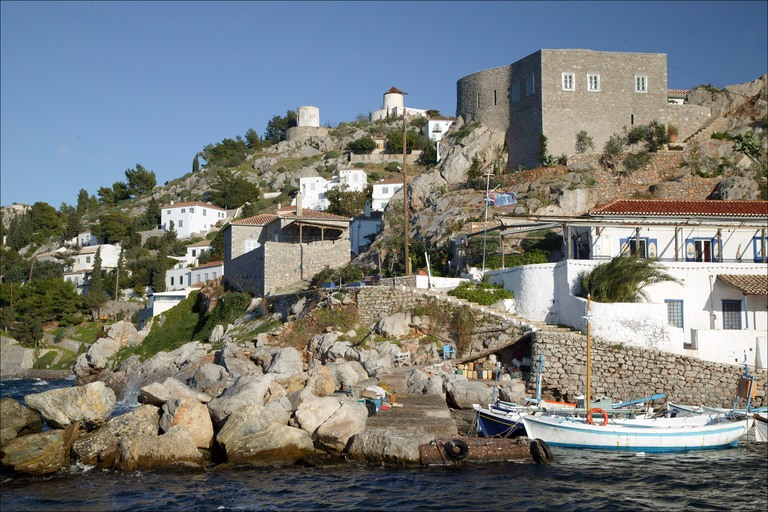
Yesterday I was forty. Today, I woke up thinking I was a Greek fishing village. I didn’t feel like me. I didn’t feel like anyone else either. I felt like a Greek fishing village, thought I was a Greek fishing village and contained everything that was going on there. There is no other way I can put it. 

Naturally, I’m both simultaneously fascinated and terrified by this peculiar turn of events. Wine helps to ease the struggle of getting through the day as a geographical oddity. Later my brother says, “I once thought I was the rock of Gibraltar,” which immediately thrills and comforts me, before adding, “But that was in a dream.” I crumple.

greek-fishing-village

A Greek fishing village, earlier.

Tuesday.

Everything aches. I sit in a hot tub in the rain. I almost fall into the hot coals in a sauna, then almost wish I had. I drink.

Wednesday.

Wake up with almost unbearable tinnitus: a deep, whirring hum in one ear and a high-pitched yelping in the other. I’ve had years of this. I’m not sure I can take much more of it. If there were a nest of vipers at the foot of my bed I would happily slither in and join them. If a canyon full of broken glass, shards of metal, and wild animals existed outside of my bedroom window I wouldn’t think twice about leaping in there. Unfortunately there isn’t, so I settle for attacking my mattress and beating up my pillows for ten minutes. The rest of the day is spent drinking. 

Thursday.

Trying to get off to sleep on Thursday night I soothe myself with thoughts of that time I worked out in Singapore, or that time I worked in the Caribbean, or that time I took a train with my then wife through the centre of Australia and how much I enjoyed seeing the seemingly endless miles of scorched red rock. I feel calm thinking of having lunch under a jungle canopy.

Then it stops calming me. I don’t think of it as me going having lunch in the rainforest, but my brain. It’s not me slicing through the centre of Australia seeing things, it’s my brain interpreting light waves and sound waves and making sense of things. My brain is making my fingers punch numbers into a phone and it’s making sounds come out of my mouth, then it’s making my limbs carry bags and whisk it off to the airport and it gets me to feed it booze and gets me to stick my hand up my then wife’s dress to give it pleasure. My whole sense of self dissolves, and I’m just this terrier-like entity, this mush, this interpretation-machine, existing in my skull. I take quadruple my usual amount of sleeping tablets.

OLYMPUS DIGITAL CAMERA

A nest of vipers, earlier. 

Friday.

Friday is better. I eat fish and plants. I play tennis and win. I swim. I try not to think about my brain. I drink one beer. When you’re better, I say to myself, you should spend the rest of your life being nicer and kinder to people. This thought pleases me. You should also, I add almost unconsciously, try being nicer and kinder to yourself. This one scares me. Have I ever been either nice or kind to myself? I meditate on this for a while until I realise that, not for the first time this year, I’m in danger of crying myself to sleep.

Saturday.

I play tennis and win. Without having to give it much thought, I play poker and win too. I eat fish and plants. I lift weights. I do some yoga. In the evening I buy an avocado in the rain. I turn off my phone. I drink one beer and wash the grill pan. Saturday.

Sunday.

Busy for a Sunday: Internet-taught yoga, internet-taught Shaolin Kung Fu, winning at poker, swimming, sauna. I feel, possibly for the first time, that I’m beginning to work as a person. Colours are sharper than normal. Flowers leap out at me and I sit and stare at them for hours. When I go to the toilet, it no longer smells of corroding metal. I stop feeling scared in my own body and in my own mind. 

People in Boscombe are buying crack cocaine and heroin when I leave the health club. People in Boscombe are on their way out for the night, happy. People in Boscombe are sitting outside drinking and look to be enjoying themselves. Temptation is everywhere here. Part of me wants to join them, to get into trouble. Part of me wants more physical and psychological scars. But another part of me – a bigger and better part – doesn’t. That part of me is intrigued by how far I can take this: this plant-eating, this exercise, this non-drinking, this new-found industry. I feel as if I’ve been on the fringes of my mind’s unedifying canyons this week and, well, I don’t want to be on those fringes  far too often. Let’s see, shall we.